IRDAI Compliance Checklist 2026: How Indian Insurance Brokers Can Avoid Penalties
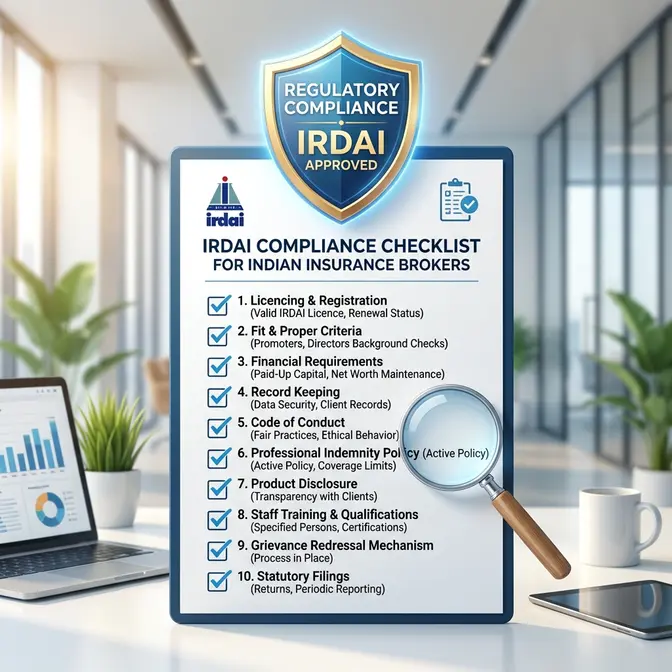
For any insurance intermediary in India—be it a Broker, Corporate Agent, or an IMF—the word “audit” often brings a sense of trepidation. The regulatory framework set by the Insurance Regulatory and Development Authority of India (IRDAI) is designed to protect consumers, but for the intermediary, it means managing a mountain of paperwork and ensuring absolute data accuracy.
As we move into 2026, the complexity of these regulations continues to evolve. Staying compliant is no longer just about filling forms; it’s about having a robust, verifiable system of record. In this guide, we break down the essential compliance pillars every insurance professional must maintain to safeguard their license and avoid heavy penalties.
📋 The Mandatory “Big Five” Registers
The backbone of any IRDAI audit is the maintenance of mandatory registers. These must be updated in real-time and be readily available for inspection.
- Register of Policies Issued: This must capture every policy sold, including the proposer’s name, policy number, date of commencement, premium amount, and the commission/brokerage earned.
- Register of Claims: A detailed record of every claim reported through your agency, tracking the status from notification to final settlement or repudiation.
- Register of Complaints/Grievances: Perhaps the most scrutinized register. It must show the date of receipt, the nature of the complaint, and the steps taken for resolution within the mandated timelines.
- Register of Employees & POSPs: A comprehensive list of all qualified persons, including their training records, certification details, and Aadhaar-linked identifications.
- Cash Book & Bank Reconciliation: Ensuring that the premiums collected (if applicable) and commissions received match your financial records with 100% accuracy.
🕒 Critical Reporting Timelines
Meeting the reporting deadlines is as important as the data itself. Missing a filing window is a red flag for regulators.
- Monthly Returns: Summaries of business placed and commissions earned.
- Quarterly Compliance Certificates: Certificates signed by the Principal Officer affirming that all regulations were followed during the quarter.
- Half-Yearly Financials: Unaudited financial statements to show solvency and operational stability.
- Annual Reports: Comprehensive audited accounts and compliance reports.
🛑 Common Compliance Pitfalls to Avoid
In our decades of experience in the Indian insurance sector, we’ve seen even the most diligent brokers stumble on these common issues:
- Inconsistent Data: When the premium mentioned in your sales register doesn’t match the amount in your bank statement.
- Delayed Grievance Redressal: IRDAI takes the 15-day resolution window very seriously. Any delay here can trigger a show-cause notice.
- Expired Certifications: Allowing a POSP or an employee to sell policies after their certificate has expired.
- Missing Disclosures: Failing to provide the client with a clear breakdown of the insurers you represent or the nature of your relationship with them.
🛡️ The Digital Solution: Moving Beyond Spreadsheets
Maintaining these registers manually in Excel is not just slow—it’s risky. One accidental deletion or a typo in a policy number can lead to a compliance nightmare during an audit.
Modern intermediaries are shifting toward specialized agency management systems that automate this record-keeping. By using a system that “inwards” policy data automatically, the registers update themselves. When a policy is read and parsed by an AI-enabled system, the risk of manual entry error is virtually eliminated, ensuring that your books are always “audit-ready.”
🔚 Conclusion
Compliance shouldn’t be a year-end panic; it should be a seamless part of your daily workflow. By maintaining accurate registers, adhering to reporting timelines, and leveraging technology to reduce human error, you can transform compliance from a burden into a competitive advantage.
The IMD.Mitra Advantage
At IMD.Mitra, we understand the pressure of IRDAI audits because we’ve been in your shoes. Our platform is built with a “Compliance-First” architecture:
- Automated Mandatory Registers: Your sales, claims, and grievance registers are updated automatically as you work.
- One-Click Audit Reports: Generate IRDAI-compliant reports in seconds, formatted exactly how the regulators expect them.
- POSP Management: Track certifications and renewals automatically so you never miss an expiry.
Stop worrying about your next audit. Book a demo today and see how IMD.Mitra keeps your agency 100% compliant, effortlessly.